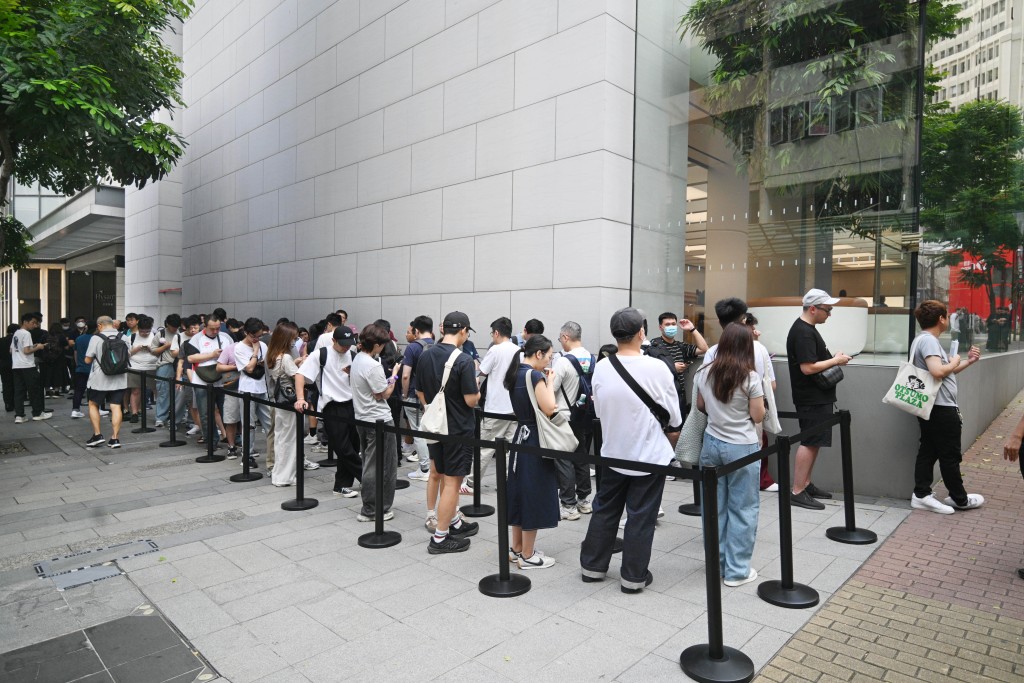
Apple's first foldable phone, the iPhone Duo, went on sale Friday evening, and the launch brought a surge of pre-orders in Hong Kong alongside a wave of reported credit card fraud, according to The Standard (HK). Users on local social media said their cards had been charged for expensive purchases even though they had never set foot in an Apple Store.
Some of those complaints included screenshots showing a single card billed as many as five times at HK$34,998 per charge. The Standard (HK) reports that this figure matches the price of two high-end 256GB models of the new device.
Why it matters
The reports point to a weak spot that appears when a product launch draws heavy traffic: checkout speed taking priority over verification. According to The Standard (HK), Apple's official checkout does not require 3D Secure one-time verification codes, a step meant to confirm that the person paying is the cardholder.
Francis Fong Po-kiu, honorary president of the Hong Kong Information Technology Federation, told the outlet that this gap is the core problem. In his account, criminal groups working from leaked card databases can use automated tools to fire off large volumes of orders for high-value electronics that are easy to resell for cash.
Fong described the fraud as a numbers game. Banks and alert cardholders stop or reverse most of these transactions, but criminals profit as long as a small share of orders slips through and ships.
Cardholders describe repeated charges and long waits
As complaints spread online, affected cardholders described difficulty reaching their banks. One victim said their card was charged at least four times and that they waited more than two hours on their bank's hotline without anyone picking up, according to The Standard (HK).
Other users began circulating practical advice. Some suggested switching off card-not-present or online payment functions inside their banking apps to lock down their accounts. Others noted that Apple only bills a card shortly before a physical order leaves the warehouse, meaning cardholders who spot unauthorized pending charges should cancel and replace their cards right away to stop the payments from completing.
Fong's advice followed a similar line. He urged the public to switch on instant transaction alerts in their banking apps, and to contact the issuing bank immediately upon receiving notice of an unauthorized charge so the card can be frozen and a dispute opened to recover the money.
The Standard (HK) published its report on the fraud reports on Saturday, the morning after the launch.
What to watch: whether Apple adds verification steps to its launch checkout, and how Hong Kong banks handle dispute volumes from the iPhone Duo pre-order window.